Commercial roofing for Hampton and the Virginia Peninsula

Commercial roofing for Hampton and the Virginia Peninsula
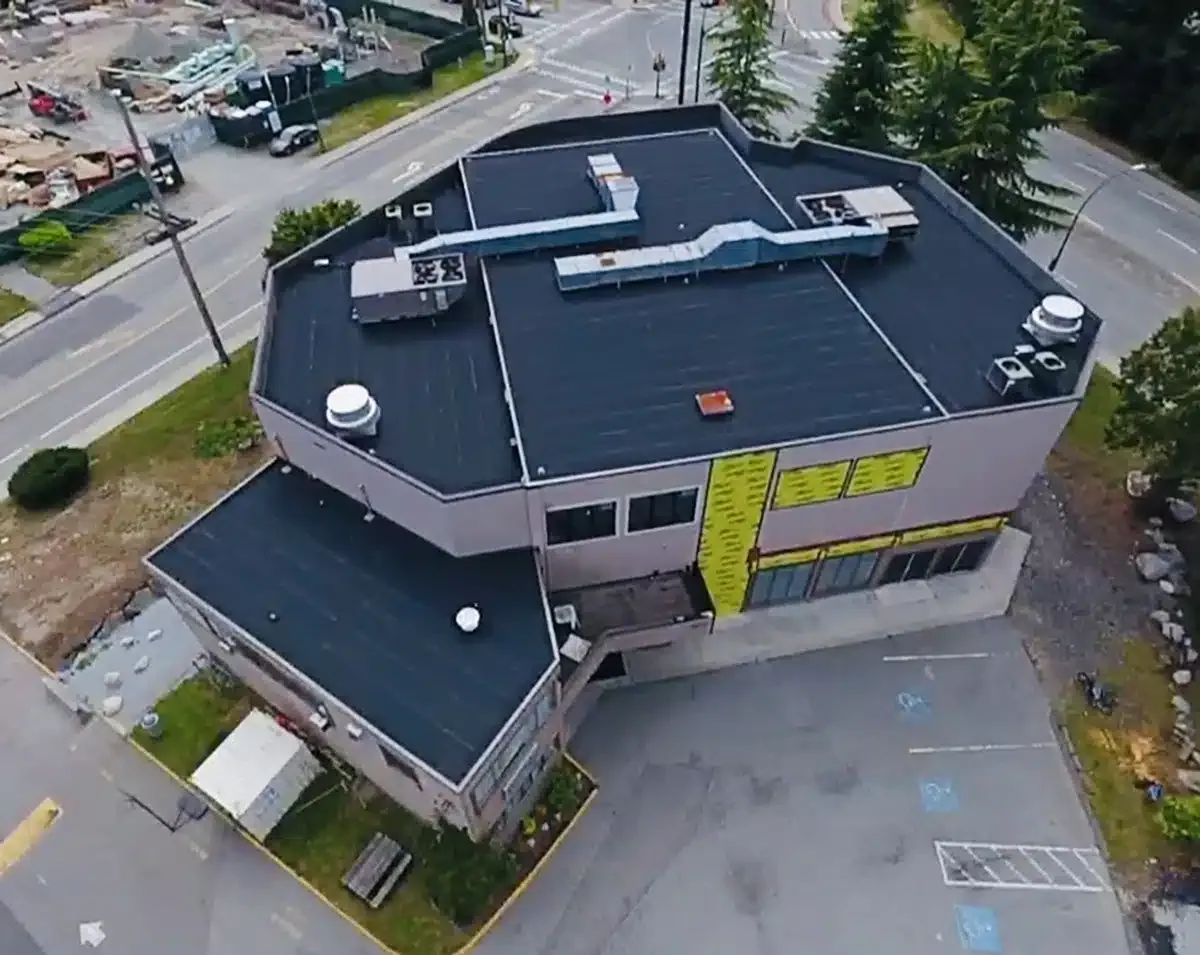
Sarnafil G and Sarnafil S membrane families use distinct attachment methods that should stay separate in a repair scope. We begin by identifying the installed system from available records, then inspect accessible roof areas and details. Sarnafil G membranes are used in adhered systems and Sarnafil S membranes in mechanically attached systems; both families include PVC membrane options. At the building, verify the installed family and attachment in each roof area before selecting the repair detail. A commercial roof inspection records the field conditions and access limits.
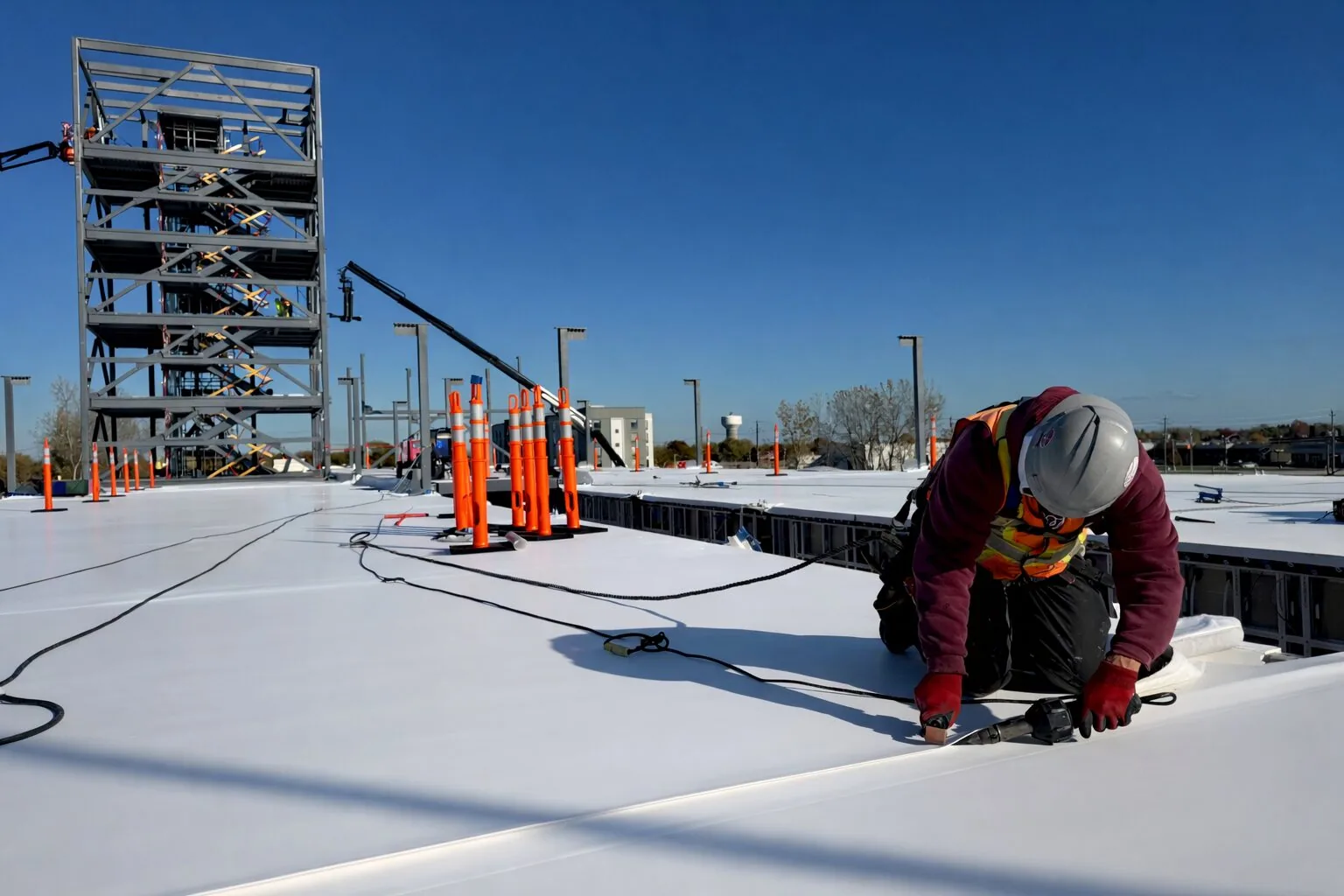
Review specifications, product data, closeout files, prior repair notes, and any warranty documents. Compare the named membrane and attachment method with accessible seams, perimeter details, penetrations, and visible fastening or adhered areas. A roof with later additions may contain separate assemblies. We label each area independently and leave uncertain sections open rather than applying one name to an entire facility based on an old product invoice.
Sarnafil PVC membrane options have product-specific system and installation details. Match the selected product and attachment method to the project and roof section before setting a repair detail. The PVC roofing system overview can explain general material considerations, while a condition report states what was observed at this property.
At a leak call, capture the reported room, date, operating effect, and access requirements. On the roof, inspect the membrane field, seams, flashings, penetrations, drains, edges, and earlier patches that can be reached safely. A ceiling mark can be separated from the actual entry point by framing or roof layers. The report therefore connects observations to roof zones and describes additional testing when the visible evidence cannot establish a cause.
Flex-office, research, light-manufacturing, storage and distribution uses appear across Hampton's business parks. That mix can affect when a roof zone is reachable, but it does not identify a Sika Sarnafil membrane or its attachment. We confirm the product and details from accessible evidence and the property records, then note any uncertainty before recommending a repair method. Access hours and interior priorities come from the facilities contact.
Thermoplastic seams and flashings depend on compatible preparation and a complete weld. The Sarnafast system uses fasteners within a seam overlap and hot-air welding to close the joint. A repair should follow the confirmed roof detail and material rather than copying a method from a different assembly. The crew checks the relevant instructions, identifies the area and limits, and tests or reworks a detail only as the approved scope requires.
A commercial repair can address a defined membrane or flashing condition, with dated photographs and a written closeout. If active water remains, temporary protection may be needed while permanent work is scoped. Keep warranty notice and approval questions with the actual contract. A maintenance review can document nearby drains and edges without expanding the original repair authorization.
For a seam repair, the work plan should identify the membrane surface, seam location, preparation required by current instructions, and how the completed area will be checked. A hot-air weld depends on suitable conditions and proper execution, so the report should state where the repair begins and ends. Do not cover an unverified moisture condition with a surface patch and call the underlying question resolved. If the edge, substrate, or an earlier repair is compromised, the scope may need to address those connected details or request a separate review before material is placed.
A replacement discussion should account for the existing substrate, roof slope, drainage, perimeter, wind design, insulation, and rooftop equipment. Attachment method affects how the assembly connects to the building and how seams are detailed. A mechanically attached layout and an adhered assembly have different design and field checks. Recover eligibility also depends on the existing layers and moisture conditions, so the survey should identify where testing or an opening is needed before final quantities are set.
The replacement scope should identify the system, attachment, membrane, flashings, edge conditions, phasing, and assumptions. A design team should match the replacement detail to the confirmed assembly, substrate, drainage, perimeter, and project requirements. If another building in a portfolio uses a GAF system or a Carlisle SynTec assembly, its details belong in a separate file.
For a multi-property Sarnafil review, we arrange each roof visit around the assigned building rather than presume two addresses share access. The contact identifies where to stage, how the crew enters, and whether an escort or lift is required. We record the membrane family, attachment detail and roof zones visible at that property, then note any section that could not be reached. A portfolio label does not make one building’s inspection a substitute for another’s.
Hampton Roads Center is a broad business-park area, and its Hampton Roads Center area needs the assigned property and roof zone in the work order. The manager confirms escort, gate, hatch or lift requirements before the crew is dispatched. That information affects how many sections can be reviewed in one visit. We list deferred zones explicitly and make a return step part of the record when access is incomplete.
Before scheduling, confirm whether the site requires a gate contact, escort, lift, or a specific roof-access window. These requirements can affect how many sections are reachable in one visit. The report records any deferred area and a return step, so the owner can coordinate that access rather than assume the inspection covered it. In Hampton Roads Center or Copeland Industrial Park, the building contact still provides the roof-entry plan; the district or park name does not identify its membrane. On an occupied property, we also ask whether the roof work could affect tenant hours, deliveries, or equipment shutdowns.
Keep the executed warranty, approved details, repair approvals, closeout package, and inspection records together. If the document calls for notice or manufacturer approval, confirm the responsible party and timing from that contract. A contractor can provide photographs and describe the observed condition, but the issuing party decides how the document applies. An inspection should not be described as warranty approval unless a written response says that clearly.
For several assets, a roof asset register can maintain separate membrane names, dates, open issues, and record locations. This keeps system details from one building from being copied to another. The same discipline helps when the owner compares different PVC products or attachment methods. Call with the affected area, access limits, available files, and the deadline for a roof decision.
At closeout, label photographs by roof section and include a broad view as well as a detail image. Note which seams were reviewed, whether the repair was completed, and whether any area needs a second visit. A manager should be able to open the file later and see why the crew selected that method. This record also gives another contractor a better starting point if the roof later develops water entry nearby. It avoids representing a local repair as a roof-wide inspection or statement about the condition of concealed layers.