Commercial roofing for Hampton and the Virginia Peninsula

Commercial roofing for Hampton and the Virginia Peninsula

The first useful detail in a leak call is where water showed up and what changed around that time. A ceiling stain, dripping pipe chase, or wet inventory gives us a starting point, not the roof opening. We ask what sits above the affected area, whether the water is still active, and what access the building can provide. On the roof, we trace a likely path through seams, drains, penetrations, edges, and prior patches. The immediate goal is to protect the interior and stop active entry when conditions allow, then document the permanent repair.
We begin with a short triage: active water, electrical or equipment exposure, occupied rooms, roof access, and weather. The building contact can move contents or place interior protection while the crew prepares the roof visit. We do not ask staff to climb onto a wet or unstable roof. If safe access is unavailable, we explain what can be protected from inside and when the exterior can be checked.
Once on the roof, we photograph the reported area and nearby details before disturbing anything. A loose patch, open lap, failed flashing, or clogged outlet may be part of the path. We inspect beyond the point directly above the stain because water can travel along insulation, deck flutes, or framing. An infrared survey may help identify patterns for follow-up, but the scan is not itself a repair map. The crew confirms where material needs to be opened or tested.
In Hampton, coastal flood advisories describe inundation near tidal waterways and shorelines. That is regional context for access and drainage, not evidence that a specific property took on water. We keep the call record tied to the condition seen at that address and the roof details that can explain it.
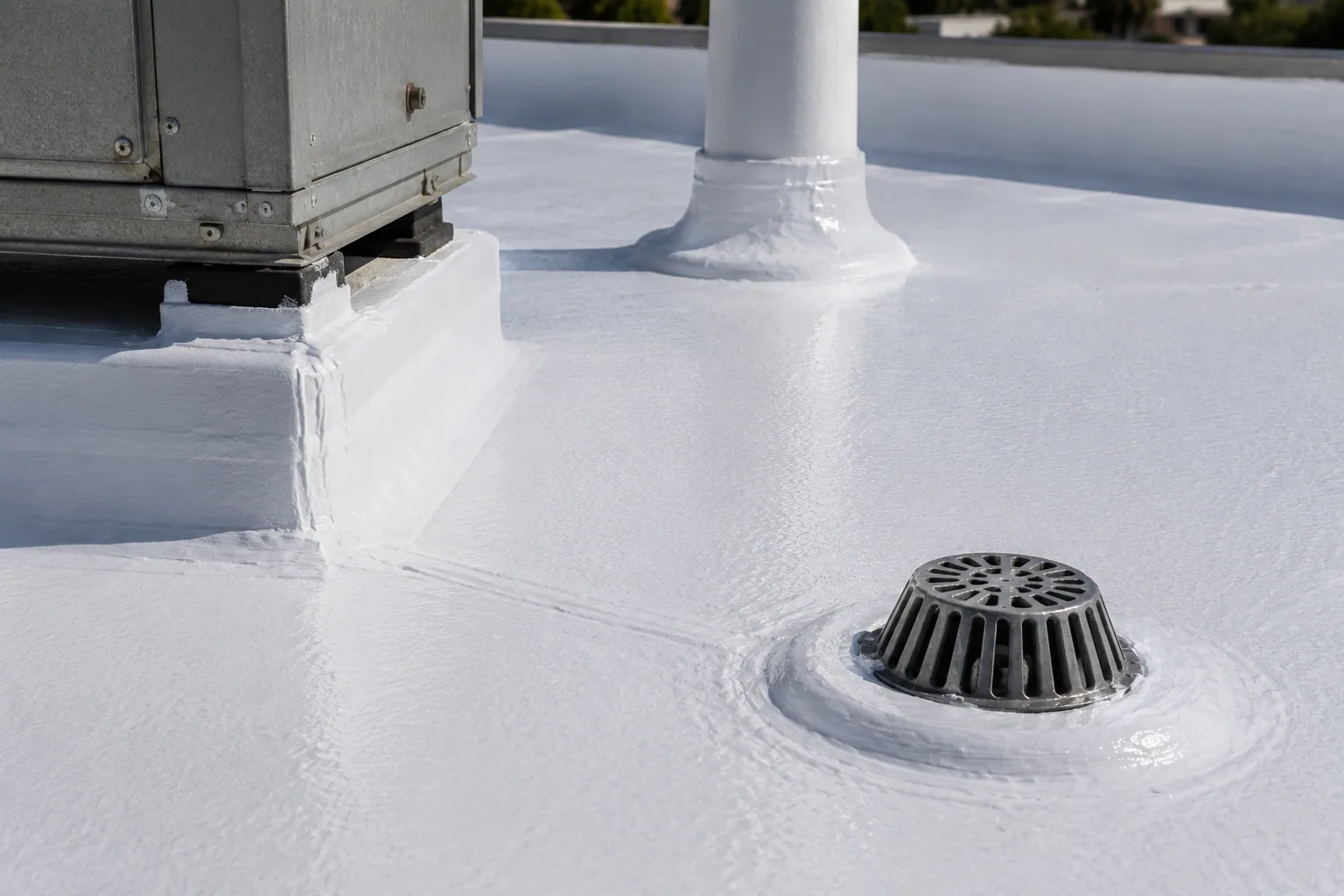
On a low-slope membrane, we inspect seams, laps, flashings, pipe boots, curbs, and edge transitions for a break in continuity. On modified bitumen or built-up roofing, the review includes surfacing, open laps, blisters, and repairs that have separated. Metal panels need attention to fasteners, closures, and movement at penetrations. A repair material must fit the existing roof. A sealant bead over dirt or a wet surface may look closed while leaving the water path open.
We also check drains, scuppers, and overflow routes. A blocked drain can create water where the assembly was not intended to hold it, while a low area may point to a slope concern that a leak patch will not solve. The written diagnosis distinguishes an outlet service item from a membrane repair or a broader drainage correction. We can include the drain and scupper repair in the same visit when the observed conditions support it. An EPDM seam gets a different repair detail from a metal lap.
Hampton identifies Mercury Boulevard, King Street, and Pembroke Avenue as major commercial roads. The buildings along those corridors vary, so we do not infer an assembly from a street name. We inspect the property, note equipment and access, and tie each repair to a specific detail.
Before a permanent repair, the work area must be dry enough and prepared for the chosen material. We remove loose patches, clean the surface, and rebuild the lap or flashing with a compatible system. Corners and terminations need enough bond to remain continuous through movement and weather. The crew photographs the completed work so the owner has a record of what changed.
If the opening sits near rooftop equipment, we check the curb and adjacent membrane for another break in the path. The penetration flashing repair needs a complete transition at each side, not a bead around the visible gap. If an edge has lifted, we review the termination and adjoining metal. A TPO patch should restore membrane continuity without leaving a weak corner.
Hurricane Isabel drove a major storm surge in Hampton Roads in September 2003, but that history does not establish that a current leak came from storm damage. We inspect present attachment, flashing, and membrane condition. If the repair uncovers wet insulation or a wider defect, we record it and revise the scope before proceeding.
A leak repair often takes place while tenants, staff, deliveries, and equipment remain in motion. We agree on roof access, interior protection, noise limits, and a safe boundary around the work. For medical-service, retail, or office space, the repair route should not interfere with entrances or occupied areas. Industrial work may need staging coordinated around loading or production. We set those details with the site contact before opening the roof.
Hampton’s community plan describes office, retail, medical-service, and mixed-use buildings in Coliseum Central. Hampton also lists manufacturing, warehouse, and distribution activity in Copeland Industrial Park. These local uses make the building’s operating schedule part of the response. We document who needs notice, how temporary protection is handled, and what conditions would pause roof work.
When a leak is active overnight or during severe weather, temporary measures may be necessary before permanent materials can be installed. We label the temporary condition and state the follow-up required. A emergency roof repair should still leave a record the asset manager can use the next morning, including photos, affected spaces, and the permanent detail to price.
Once the surface is ready, we review the completed detail and note the limits of the repair. A controlled water test may be appropriate if the assembly and site conditions support it. Otherwise, the photo record and a scheduled follow-up can verify the area without introducing water to a roof that is not prepared for testing. If the same opening has been patched before, we compare the new findings with the earlier repair record.
Repeated leakage can indicate a detail that needs rebuilding, a drainage issue, or concealed moisture around the initial opening. We can perform a broader commercial roof inspection or recommend a targeted infrared moisture survey when that will help define the scope. Testing is selected to answer a specific question, not added automatically.
Virginia’s Uniform Statewide Building Code applies to maintenance, repair, and renovation as well as new construction. We coordinate required review with the project team when a repair changes more than a localized detail. The final notes identify work completed, further action, and any open item that could affect the next roof decision.
Leak-repair cost reflects access, roof height, material, detail count, interior protection, testing, and any wet insulation or deck damage. Temporary dry-in differs from permanent repair. The estimate identifies included work and what would require separate approval.
Response time depends on weather, safe access, materials, and the building’s operating limits. Tell us whether water is entering, what equipment or inventory is exposed, and which spaces are occupied. That helps set the first inspection priorities.
For several leaks, we group repairs by area and urgency while keeping each one traceable. The owner can choose immediate containment, a planned repair window, or broader work for recurring defects. The next step follows the record, not the stain size.