Commercial roofing for Hampton and the Virginia Peninsula

Commercial roofing for Hampton and the Virginia Peninsula
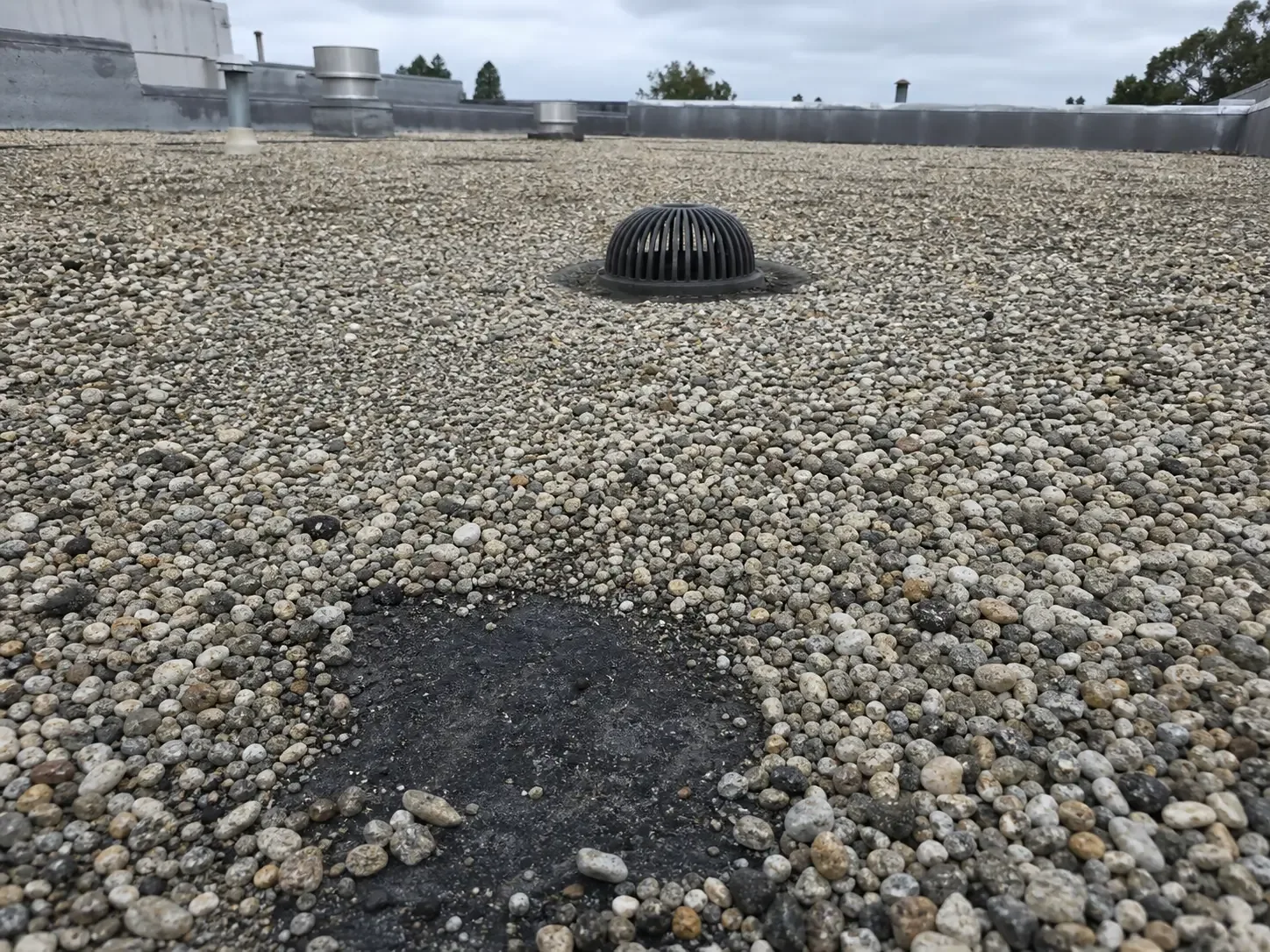
A split lap can let water travel below a membrane before a stain appears inside. We follow the opening along adjoining sheets, inspect nearby curbs and terminations, and photograph the conditions that define the repair boundary. The nearest ceiling mark is only a clue; it may not sit below the failed seam. Hampton Roads flood exposure is regional context, not proof of roof damage. A roof inspection records the seam, drainage, and details that could change the repair or testing plan.
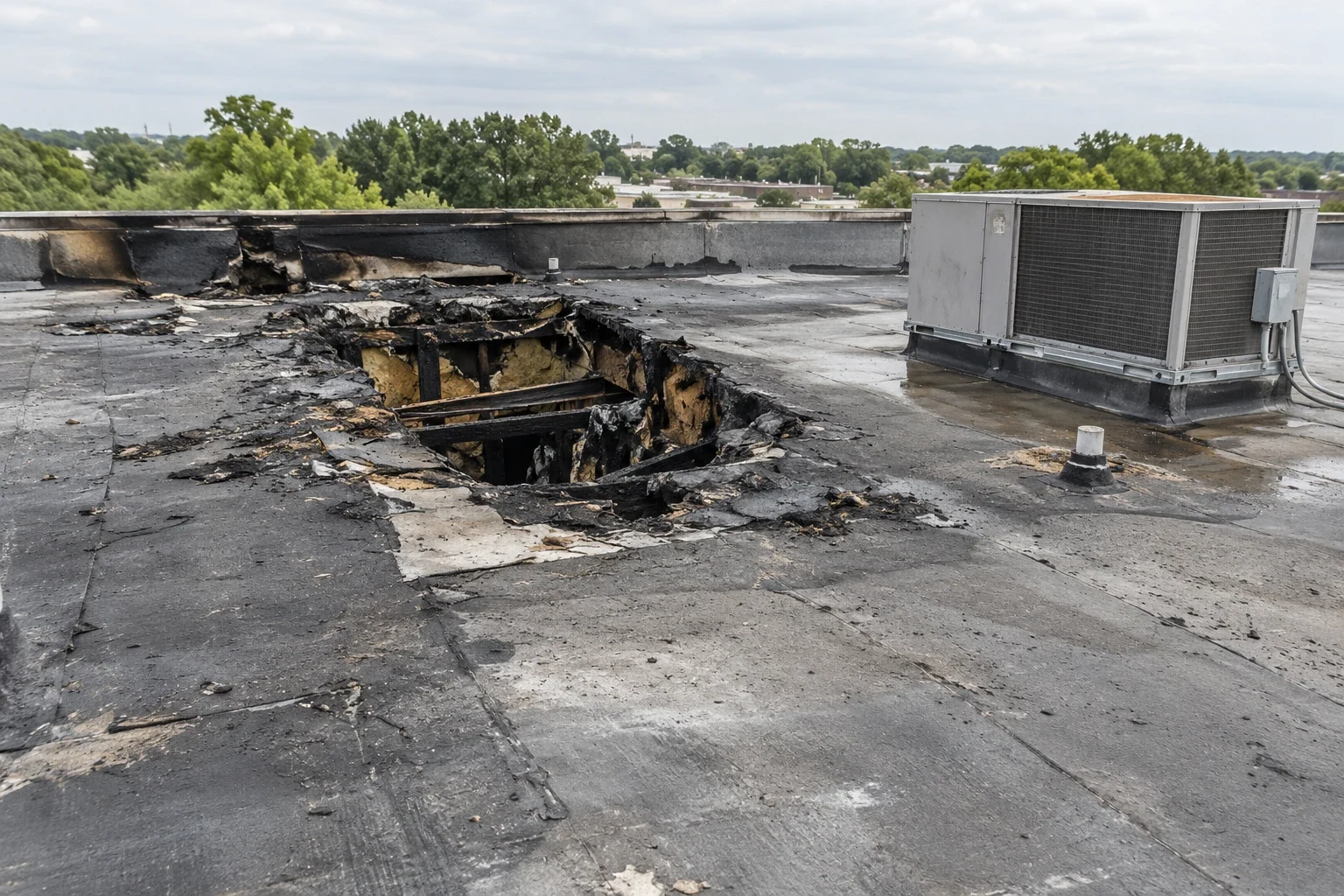
The crew checks the full visible lap, adjoining membrane, substrate condition, and transitions at nearby curbs or penetrations. A seam may be open in one location while the surrounding material remains attached, or the separation may continue beyond the first visible point. We record length and location in the field record and check for moisture or prior repair layers that affect the scope. Adhesive, weld, or tape repairs leave different visual signs, and a prior patch does not prove the lap below it remains bonded. We photograph the edge of that work, check for lifted corners or trapped moisture, and record whether a test opening is needed before adding another repair. If the existing material cannot be confirmed from records and field cues, the scope remains conditional until the system is identified.
Where an interior leak is reported, we compare its location with the roof findings rather than assume the water entered directly above. If the assembly is wet or concealed, a closer moisture review may determine how much material to remove. A membrane puncture inspection may be a separate question when an impact mark sits near the seam, but each defect is documented on its own evidence.
King Street is one of Hampton’s major commercial roads and has a watershed study. A service address near that route is still evaluated by the installed roof system, observed seam condition, and building access. The corridor’s role does not predict which membrane or detail a property has. We confirm those facts in the field or from records supplied for the asset.
Hampton Roads saw Isabel’s surge in 2003, and roads in central and southern Virginia also had heavy rain and high water that September. That regional history does not establish that a particular seam was damaged. After a storm report, we separate current photographs and new observations from earlier repairs. A King Street corridor visit is scoped to the named property and the roof section the manager identifies.
Seam repair depends on the installed material, lap construction, surface contamination, and condition beneath the opening. We prepare the area, remove failed material as required, and restore the lap using a compatible method. For heat-welded membranes, the crew checks equipment and surface conditions before welding; for adhered or asphaltic systems, the repair method follows the product and roof assembly.
A patch that only covers the top of an open lap may leave a path at the edge or at a nearby transition. We work across the full affected boundary and record the detail that was closed. If the substrate is wet or unstable, we document it before proceeding. A commercial roof repair scope identifies preparation, material, tie-in, temporary protection, and any follow-up test needed to confirm the work.
Seam work needs a dry, suitable surface and enough time to prepare, install, and inspect the repair. Before opening the roof, we choose a stopping point and make sure temporary protection can be secured if conditions change. If rain arrives before permanent work is complete, the crew records the area left under protection and the return step required.
Low-lying areas near Hampton Roads tidal waterways have a regional inundation risk of two to three feet; that context is not a forecast for an individual property. The warning is regional context, not a site forecast. For a roof seam, the decision still follows the actual material and weather at the property. A temporary emergency response can control water while a permanent seam repair waits for suitable conditions.
A seam may terminate near a curb, wall, drain, edge, or change in roof elevation. We inspect those connections when the reported water path or membrane movement could involve them. If flashing is loose or open, that detail is scoped separately from the field seam. If the seam is intact but water enters at a curb, we do not describe the membrane lap as the cause.
Office, retail, medical-service, and mixed-use properties are part of both Coliseum Central and Downtown Hampton. Those uses are context only; the roof detail at each building is confirmed. A flashing failure review can document a related transition, with its own preparation and closeout. This separation lets the manager approve a defined repair while preserving a record of any adjacent condition that remains open.
Thermoplastic seams, EPDM laps, modified-bitumen joints, built-up roofing, and metal panel seams require different inspection and repair methods. We identify the system using accessible roof evidence and project records before choosing materials. Color alone is not enough to name a membrane. If the system remains uncertain, we record the needed check rather than propose a product-specific weld or adhesive.
For a confirmed TPO roof, the condition of the surface and substrate affects preparation and weld quality. A TPO seam repair follows the installed membrane and the detail at hand. A coating or overlay is considered only after moisture, attachment, drainage, and existing layers are reviewed. The proposal names what the repair addresses, what remains outside the boundary, and how the owner can verify the closeout record.
We record where the seam opened, what preparation and repair were completed, and any nearby condition left for monitoring. The owner receives photographs and a concise record tied to the roof area. A follow-up can verify the closed lap after exposure to weather and confirm that drains and adjacent details remain clear.
Hampton’s watershed studies include King Street and other local drainage areas, while the roof record stays focused on the building and seam inspected. For recurring service, preventive maintenance can revisit seams, drains, flashings, and prior repairs in a repeatable log. If wind damage is reported at the same time, a separate wind damage inspection checks edges and terminations rather than assuming every opening shares one cause. If the lap cannot be prepared cleanly, the repair plan identifies substrate or contamination work before a new seam is closed.