Commercial roofing for Hampton and the Virginia Peninsula

Commercial roofing for Hampton and the Virginia Peninsula
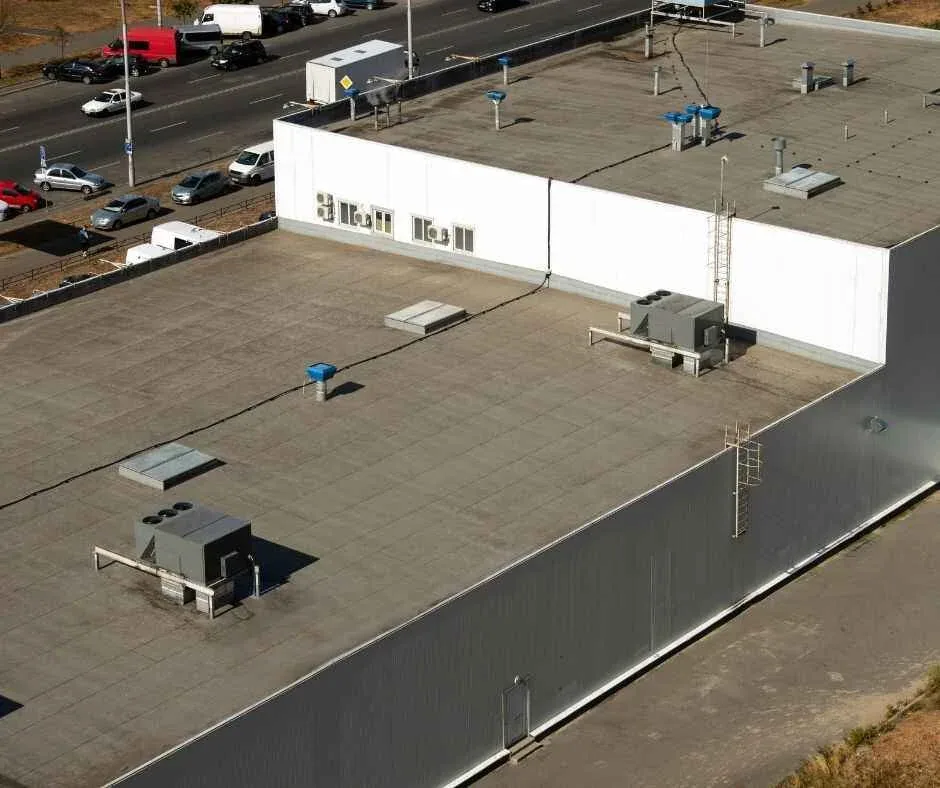
A split at a roof-to-wall transition can send water along the deck before it appears inside. We trace the reported leak to nearby curbs, penetrations, parapets, drains, and edge details, then photograph the flashing condition and the adjoining roof surface. The repair boundary follows what the crew can verify. Coliseum Central and Downtown Hampton include office, medical-service, retail, and mixed-use properties. That area profile gives context only; our inspection documents the assembly found at the building. A commercial roof inspection can identify the transition, the exposed material, and any nearby condition that changes the repair.
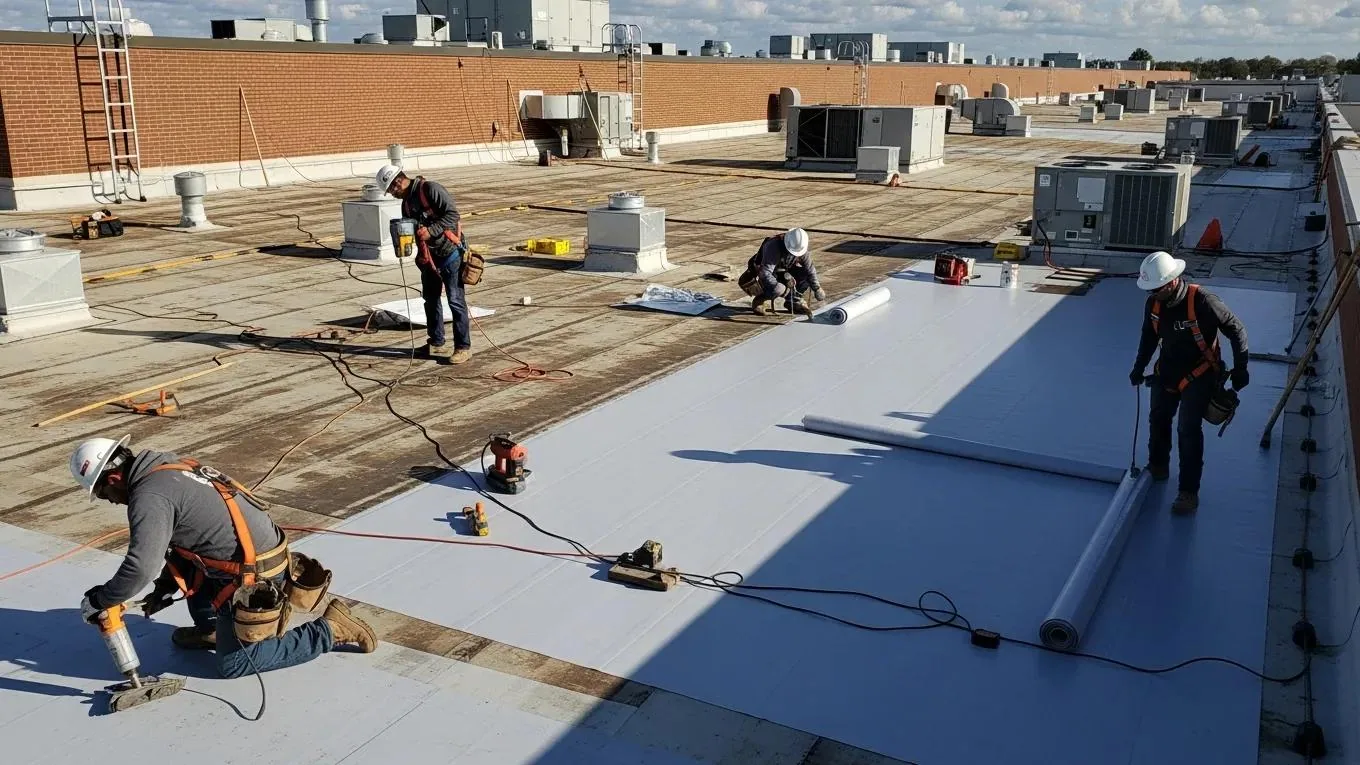
Flashing can fail where membrane, metal, masonry, a curb, or a pipe penetration meet. We check for open seams, separated sealant, movement, tears, loose counterflashing, and prior patches. The crew follows the water report beyond the nearest visible joint, because a leak may travel across insulation or structure before it reaches a room. Photographs label each detail and help the owner compare the finding with repair records.
At a roof-to-wall condition, we check the termination, fastening, substrate, and any counterflashing that protects the upper edge. At a curb, the flashing must close around equipment without blocking maintenance access. If the assembly is not visible, we state what needs to be opened or tested. A roof leak investigation can separate confirmed openings from suspect details that need further review.
Three major commercial corridors in Hampton are Mercury Boulevard, King Street, and Pembroke Avenue; commercial activity clusters at selected junctions. Those map designations locate activity corridors; they cannot identify a wall transition, flashing failure, or roof condition at an individual property.
We confirm the building, access route, roof material, and transitions that relate to the reported water. A curb near rooftop equipment may need different treatment from a parapet or masonry wall. For a visit in Coliseum Central, we scope the repair to the identified building and work area. That distinction keeps local context useful without attributing a common defect to every commercial roof in the district.
Open flashing can follow material aging, movement at a transition, poor prior preparation, impact, or a detail that was not closed around its full perimeter. The field review looks for the actual condition and checks whether adjacent membrane or substrate is sound. We do not assign a cause from the appearance of a single crack or loose edge alone.
After a storm, new damage should be separated from older repair work. In September 2003, Isabel’s surge affected Hampton Roads while heavy rain and high water reached roads across central and southern Virginia. That regional record does not establish damage at a particular roof. If the property reports a new opening, we photograph the current detail and compare it with available records, then define the work supported by those observations.
A flashing repair starts with preparation of the adjoining surfaces and confirmation of the installed roof system. We remove or secure failed material as the scope requires, then restore the transition with compatible flashing and termination methods. A patch that stops short of a corner, pipe, or curb can leave an open path, so the repair detail follows the full affected boundary. At a wall transition, we check how the upper termination sheds water and whether movement has opened the joint. At a pipe or curb, the repair must close around the full perimeter while leaving equipment service access. The crew records the material and fastening method so the next inspection can find the same detail.
We document any concealed condition found during preparation and request direction before expanding the scope. If the wall, curb, or substrate itself needs work, that responsibility is identified for coordination. The estimate names included material, work limits, temporary protection, and any test needed before the roof is closed. A commercial repair scope records the detail and the next step. Related seam failure may be evaluated separately if the adjoining membrane joint is also open.
Flashing materials and attachment differ among TPO, PVC, EPDM, modified bitumen, built-up, standing seam metal, and coating systems. We identify the assembly using accessible evidence and property records before selecting the repair method. A product name is not assumed from color or a prior invoice. Where the roof surface cannot be confirmed, the proposal states the needed investigation. Surface moisture or contamination can affect adhesion and weld quality, so preparation is checked before a seam or cover strip is installed. The closeout record states what was prepared.
For a membrane, weld or adhesive preparation depends on the actual material and surrounding condition. Metal transitions require attention to movement, fasteners, sealant, and panel edges. A coating may bridge a compatible surface only when preparation and details support it; it does not substitute for repairing a loose termination. The chosen method is tied to the field finding, not applied as a generic sealant layer over every flashing condition.
Roof flashing work is sensitive to surface moisture, temperature, wind, and the time needed to close the detail. Before removal, the crew selects a stopping point and temporary protection for the opening. If weather changes, the report records the condition left and the permanent step still required. That sequence matters when water could move into occupied space or equipment below.
Shoreline districts and communities beside tidal waterways in Hampton Roads can face coastal flooding. Local flood exposure cannot identify a failed flashing at a particular property. The actual roof detail is inspected, photographed, and repaired under suitable conditions. For storm-related work, wind damage review can consider adjacent edges and terminations, while the flashing scope remains limited to confirmed roof conditions.
After repair, we record the transition, work completed, material used, photographs, and any area that remains under observation. A building manager can keep the report with the leak history and identify the detail at a future roof walk. If access prevented inspection of the opposite side of a wall or curb, that limitation stays visible in the record.
Coliseum Central has a separate watershed plan; a resilience plan also covers Downtown Hampton, Phoebus, and Buckroe. A building in either district still needs its own roof inspection, with the crew tracing the reported water to the actual flashing detail. For routine follow-up, preventive roof maintenance can revisit seams, flashings, drains, and previous repairs. A roofing claim record may include the photos and scope, without deciding coverage. At closeout, the report distinguishes the opened joint from adjacent sealant, membrane, and metal that remain serviceable.