Commercial roofing for Hampton and the Virginia Peninsula

Commercial roofing for Hampton and the Virginia Peninsula
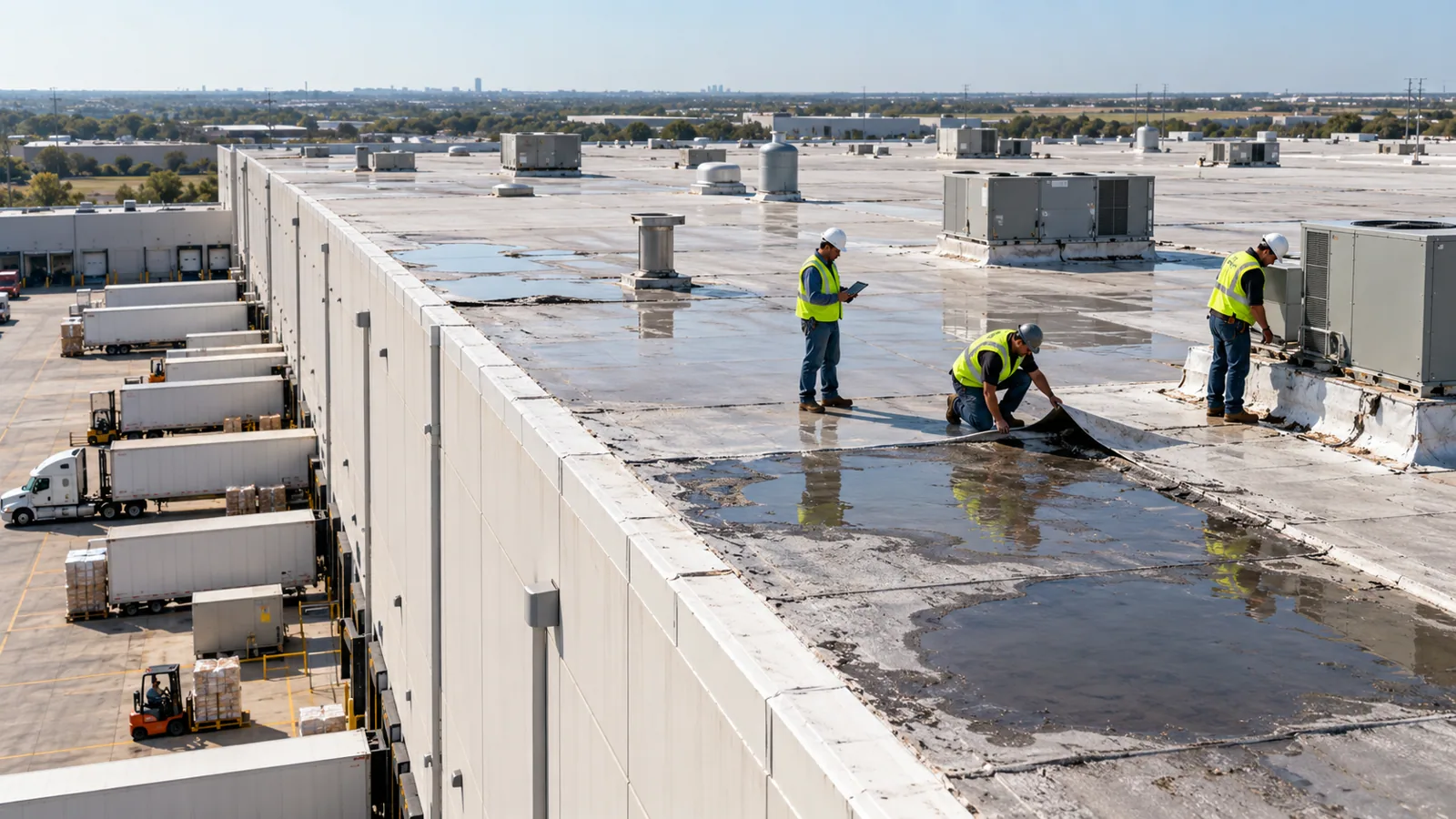
A roof capital plan begins with current field conditions, not a replacement date copied forward from an old spreadsheet. We document active leaks, membrane or metal condition, drainage, flashing, insulation findings, access, and repair history, then identify what needs action now and what requires more testing. Hampton’s business-park inventory spans office, flex-office, light manufacturing, research, warehouse, and distribution uses. A capital schedule should reflect each property’s actual roof and operating constraints, not its category alone. A commercial roof inspection can provide the findings needed to build that sequence.

A capital discussion should show which defect is confirmed, what test remains open, and which work can be priced. Localized leaks may call for repair; widespread deterioration, wet insulation, or repeated failures can justify a larger review. We document the assembly and repair boundary so the owner can compare the options against the observed roof.
A recover, coating, and replacement are different scopes with different preparation, attachment, drainage, and code questions. The existing layers and deck must be reviewed before a path is selected. A condition report can identify the field evidence and limitations, while seam failure repairs may close a specific opening without determining the needs of the entire roof.
The order of work can matter as much as the system. We identify roof zones that can be opened, protected, and closed within suitable weather windows. For occupied spaces, the sequence accounts for access, equipment service, material movement, noise-sensitive hours, and any temporary interior limits. Each phase names the point at which work can safely stop if conditions change.
Hampton’s access network links I-64 and Magruder Boulevard with its Roads Center business parks, while Copeland lies beside the I-64/I-664 junction. These facts may help frame delivery routing, but the site contact confirms actual access and staging. A capital schedule near Hampton Roads Center Parkway still depends on the property’s gates, roof entry, and operating calendar. The plan identifies those site assumptions instead of using road proximity as a fixed schedule.
Northeastern neighborhoods combine low ground with recurring tidal floods, coastal exposure, and prolonged nor’easters, all relevant to drainage and weather planning. The September 2003 Isabel account links storm surge in Hampton Roads with rain and high road water across central and southern Virginia. These facts provide regional context, not evidence of damage or remaining roof life at an individual property.
For a capital decision, we inspect the actual roof, drains, overflow paths, edge details, and interior reports. A ponding-water investigation may be a separate repair item, while wind or water observations are recorded as field conditions. The recommendation states which findings support immediate work, follow-up testing, or a longer-range project. Hampton’s area plans help locate the property; they do not replace roof-specific evidence.
Cost and timing depend on roof area, assembly, removal, substrate, equipment details, access, disposal, material availability, and phasing. A useful planning estimate identifies the scope basis and any concealed condition that could change it. If wet insulation is found after removal, the crew documents the area and requests owner direction before added work proceeds.An estimate also indicates which quantities come from field measurement and which depend on later removal. If the proposal includes alternates, each option states the system, preparation, tie-ins, and work area it changes. The owner can compare those choices against operational constraints without treating the lowest initial scope as the only available path. We identify the decision deadline for long-lead materials and any approval needed before mobilization.
We can separate a near-term repair from a replacement budget and list alternates where the roof conditions support more than one path. Each option describes preparation, flashing, drainage, temporary protection, and closeout. Virginia’s statewide code covers upkeep, repair, renovation, and changes of use alongside newly constructed work. Project-specific requirements are confirmed with the responsible authority. The capital plan should identify code or permit questions before bid assumptions are treated as final.
A portfolio summary can group work by timing or property, but each roof keeps its own condition record. One building may need drain repairs and another may need membrane testing. Similar roof ages or tenants do not prove the same assembly. We list immediate actions, open tests, and capital options separately so the owner can direct each property’s next step.
Hampton identifies commercial activity along Mercury Boulevard, King Street, and Pembroke Avenue and office, retail, medical-service, and mixed uses in Coliseum Central and Downtown Hampton. Those local details help orient service routing, while the property record determines scope. Roof asset management can keep the building-level record current, and a property manager can coordinate access across occupied sites.
Once the owner selects a project, the scope moves into drawings, submittals, access planning, and a weather-aware sequence. We confirm existing roof details, penetrations, equipment clearances, and staging. If field conditions differ from the record, the crew documents the change and seeks direction before expanding work. That keeps the approved budget connected to the work actually installed.For each phase, the field plan identifies the roof section, staging and access route, temporary dry-in, and the handoff point to the next trade. If mechanical equipment or penetrations will change, the affected details are confirmed before roofing closes around them. A site contact can review the sequence and state which hours or routes must remain available. These items become part of the schedule assumptions carried into the project.
A commercial roof replacement scope can identify removal, substrate preparation, insulation, flashing, edges, phasing, and closeout. If only selected zones are approved, the limits should be clear so repairs outside the project remain tracked. The facilities contact receives the planned sequence and the access information needed before mobilization.
After work, we record completed areas, photographs, materials when confirmed, test results where applicable, and recommendations that remain open. The owner can compare the finished scope with the initial condition report and update future planning. A follow-up inspection is scheduled for an identified reason, such as checking a repaired transition or monitoring a remaining area.The owner can also record deferred items with a reason and a planned review date. That keeps an open test or repair visible between budget cycles and prevents a preliminary allowance from being mistaken for a verified project scope.
Hampton’s local weather and transportation context remain background for future review, not a substitute for inspection. The updated record preserves the roof area, date, action, and next decision. A due-diligence survey can later review that history along with accessible field conditions, stating what the visit did and did not cover. The next capital plan starts from a documented roof rather than a date assumed to apply to every asset.