Commercial roofing for Hampton and the Virginia Peninsula
Commercial roofing for Hampton and the Virginia Peninsula

A roof review during acquisition starts with the documents the buyer has and the questions the transaction needs answered. We inspect accessible roof areas, photograph visible conditions, and compare findings with the plans and service records provided. The survey separates observed defects from assumptions about concealed layers, remaining service life, or future cost. In Hampton, VA, a useful report also distinguishes local market context from evidence about the building under review. A condition report can capture the field findings in a format the buyer and seller can discuss.
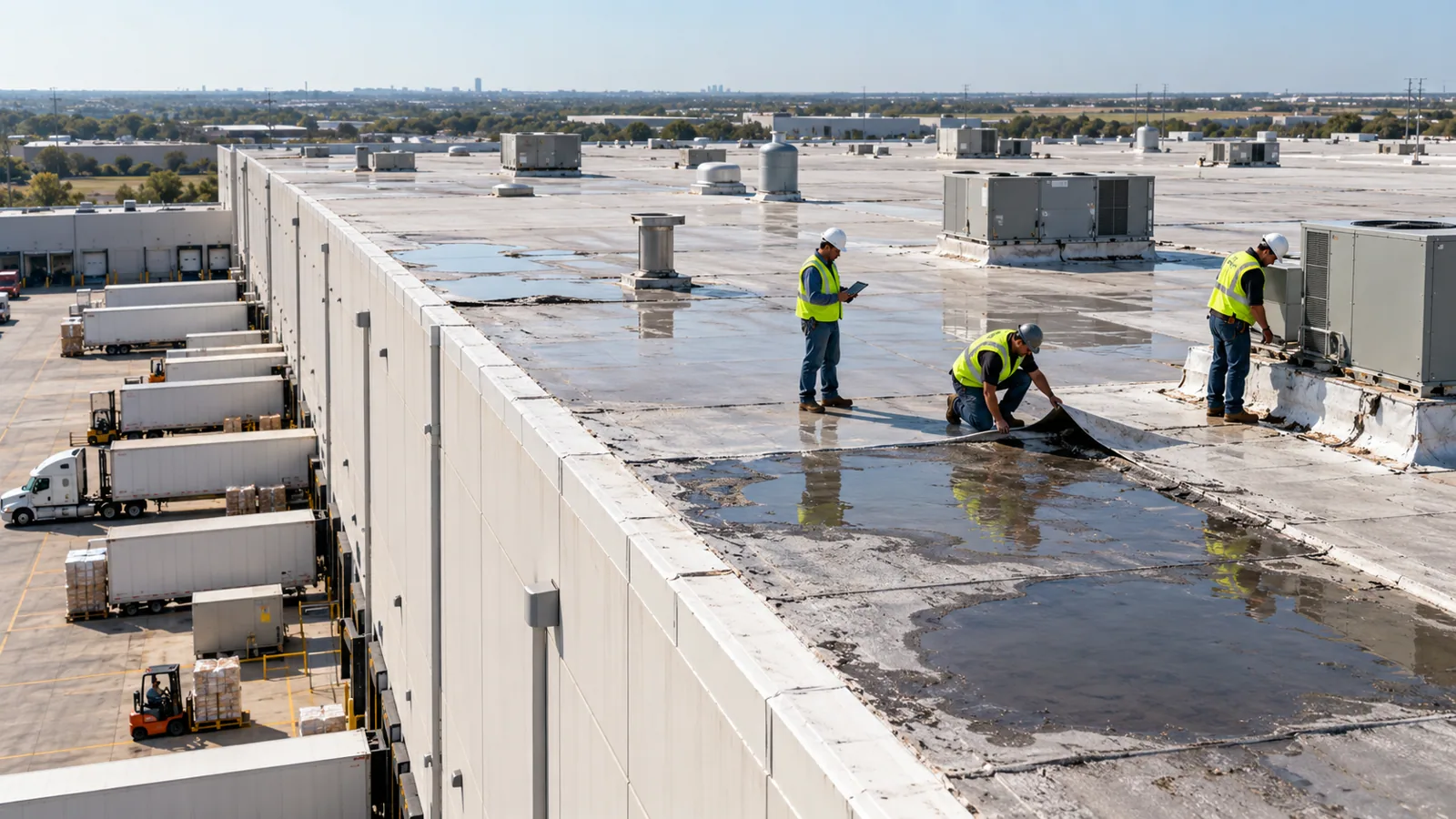
Before scheduling, we confirm the property, transaction deadline, access requirements, operating restrictions, requested deliverables, and records available for review. The roof walk may include accessible membrane or metal areas, seams, flashings, drains, penetrations, edge details, rooftop equipment interfaces, and visible prior repairs. An occupied building may require escorts, tenant coordination, or limits on where the crew can enter. We record inaccessible areas rather than suggesting they were inspected.
A visual survey is not an engineering analysis, destructive investigation, code review, or promise about future performance unless a separate written scope expressly includes such work. If the buyer’s question turns on hidden moisture, assembly thickness, or deck condition, additional testing may be needed. A commercial roof inspection can establish visible findings; the report identifies what further work would answer a specific open question.
Relevant files may include roof plans, prior proposals, repair invoices, inspection reports, warranty documents, leak logs, and closeout photographs. We note the documents reviewed and any date or building mismatch. A record can describe a past condition without proving that it remains unchanged. We compare its location references with the roof areas visible during the current visit, and list missing materials that the owner may want to request.
For a portfolio transaction, each structure should retain a separate record even when similar systems are reported. A roof asset register can organize building names, system details where confirmed, photographs, and open items. That creates a more useful handoff than one summary condition assigned to every property. We do not infer a membrane manufacturer, installation date, or warranty term when the source files do not establish it.
The survey records the location and extent of observable conditions, such as a separated seam, damaged flashing, ponding, exposed insulation, or a previous patch. Each item receives a photograph or roof-zone reference when available. The report states the immediate implication and a next step, such as repair pricing, monitoring, or testing. It avoids turning a visible symptom into a definitive cause when drainage, concealed layers, or interior conditions were outside the agreed review.
Where water has been reported inside, we compare the report location with roof observations but do not assume that the two points align. A targeted flashing review or drainage assessment may be appropriate if the field evidence suggests those details need attention. If moisture below the assembly could change the transaction estimate, an infrared survey may be a separate option under suitable conditions.
Plans for Coliseum Central and Downtown Hampton describe office, retail, medical-service, and mixed-use properties. Hampton’s business parks span offices and flex offices, research, light manufacturing, warehousing, and distribution. Those facts describe the range of local building activity; they do not tell us what a specific acquisition target contains. The survey confirms the property’s actual roof areas, access, and documented maintenance history.
Copeland Industrial Park and Bright’s Creek have Hampton’s heaviest industrial uses, near the I-64/I-664 convergence. Some rail access is available within Copeland Industrial Park. A district name helps locate a service request, while the survey records the specific building, roof areas, access, and condition. The Coliseum Central area and other districts remain broad geographic references, not individual-property targets.
A buyer may need to distinguish a near-term repair allowance from a broader replacement assumption. We can describe visible work categories and the evidence that supports them, then identify items that still require measurements, testing, or contractor pricing. The report should not present a budget range as a bid unless a detailed scope and current project inputs support one. Access, assembly, roof area, phasing, disposal, and occupied-building requirements can change the work plan.
If a defined defect is found, a repair scope can describe the affected area and proposed method. If larger work is under consideration, a capital-planning review can separate repair, investigation, and replacement decisions by timing. For a commercial portfolio, condition and costs should remain tied to each asset rather than rolled into an unsupported average.
Give the buyer’s representative a concise list of inspected areas, unavailable records, access limits, photographs, observed conditions, and recommended follow-up. If a question remains open, write the question plainly and state what evidence could resolve it. The parties can then decide whether to request additional access, a manufacturer file, a moisture test, or a separate engineering review. A due-diligence survey is a dated field snapshot, not a forecast that the roof will perform for a stated period.
When the property changes hands, the report can help the new facilities contact organize open repairs and maintenance. A warranty file review may be useful when the transaction includes roof documents that need sorting. The buyer should confirm contract terms and notice requirements with the issuing party or its adviser. We keep field observations and document interpretations clearly separated so the next owner can follow each source.
For a sound handoff, every recommendation should point to the observation, document, or test that supports it. A manager reviewing the file later should be able to tell what the crew saw, what the seller supplied, and what the buyer still needs to confirm. We identify assumptions in the report rather than letting them appear as facts. If follow-up work is authorized, record the scope, date, materials confirmed, and any condition left for monitoring.
Hampton’s coastal setting and Hampton Roads storm history may inform a buyer’s questions about drainage and weather-related repairs, but they do not prove damage at an individual property. We review the roof evidence itself and the available history. Call with the property, transaction schedule, access contact, and the specific roof questions that matter to the purchase so the survey can be scoped before the visit.
When available records disagree, list the source and the point that needs confirmation. A roof plan may use a different building name than a repair invoice, or a photograph may lack a date. The survey can note those discrepancies and ask the seller or property contact for a matching document. This makes the next decision more focused: a buyer can request the right file, approve a targeted investigation, or price a known repair scope. It also preserves the distinction between an incomplete record and a physical roof defect, which matters when several people are reviewing the transaction.