Commercial roofing for Hampton and the Virginia Peninsula
Commercial roofing for Hampton and the Virginia Peninsula
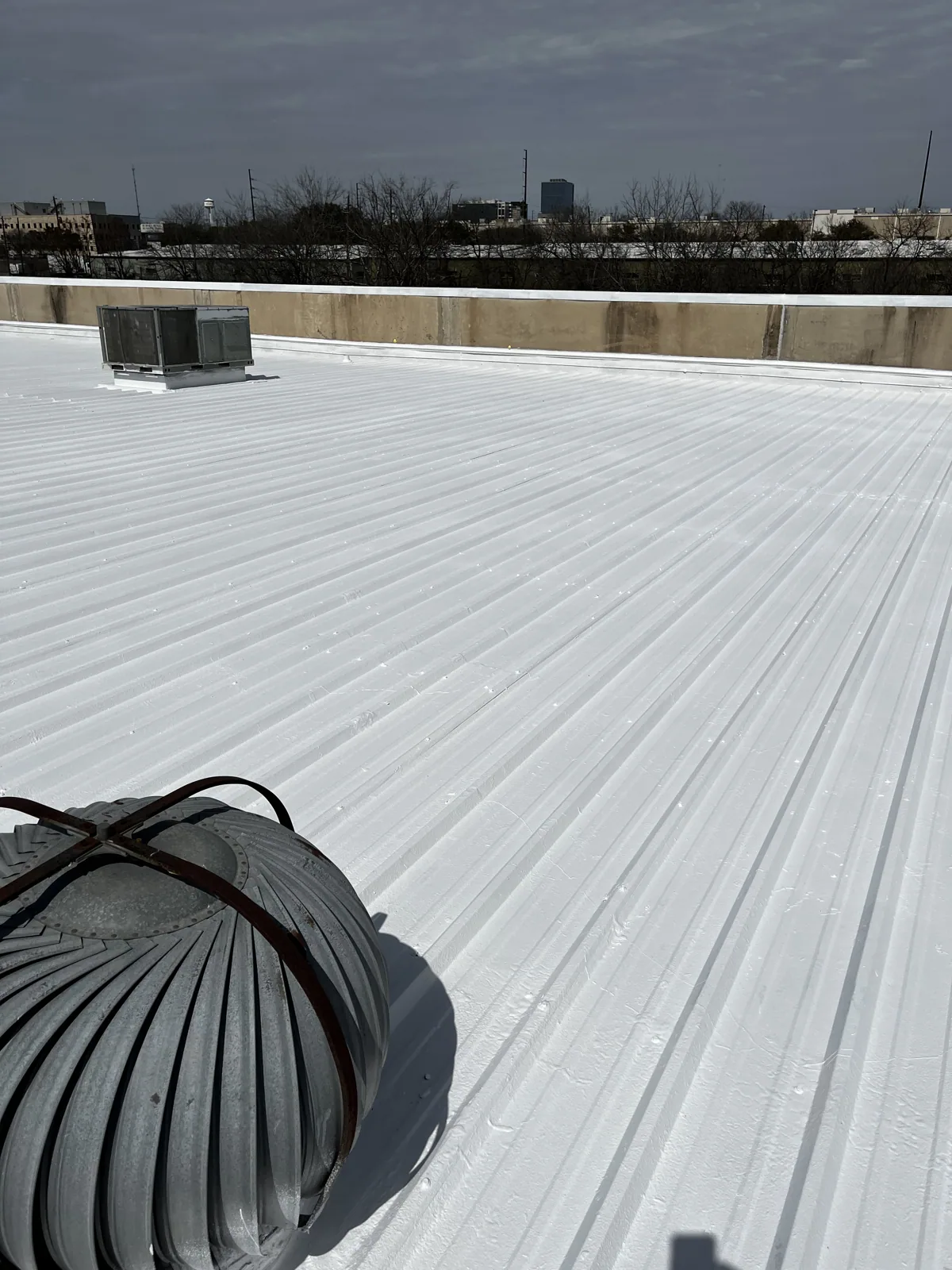
A warm patch on an infrared image is a question to check, not a verdict about the roof. We use thermal patterns to identify areas that may hold moisture, then compare them with surface conditions, interior clues, and the roof assembly. In Hampton, where coastal weather and occupied commercial buildings make access and timing consequential, a survey should narrow the next inspection step. The asset manager needs to know which areas warrant confirmation, what test can answer that question, and whether the result could change a repair, recover, or replacement scope.
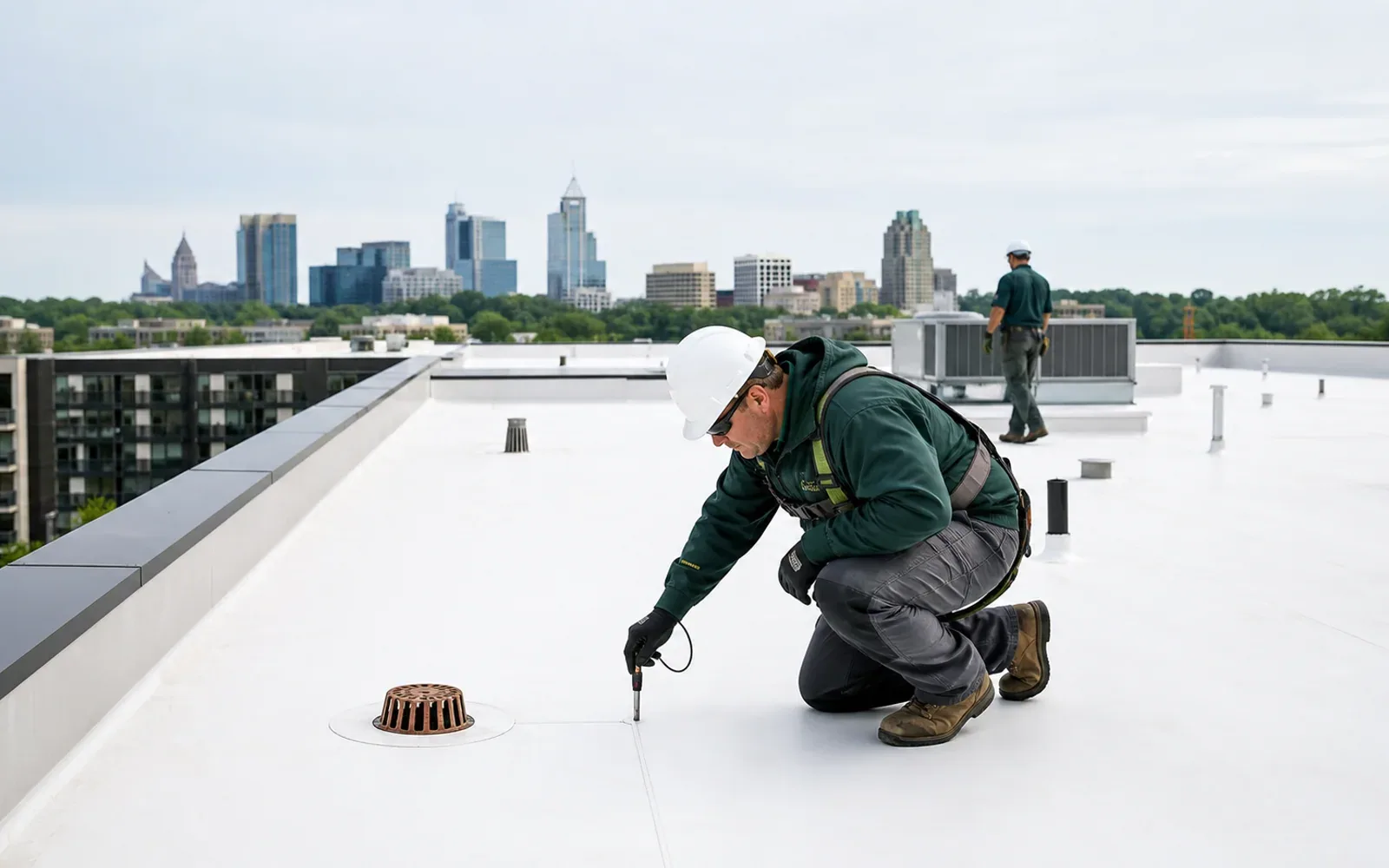
Infrared work depends on weather, surface conditions, roof exposure, and the timing of capture. Recent rain, shade, rooftop equipment, reflective materials, and uneven heating can affect patterns. We review these limits before interpreting an image and record conditions that could change the result. If the roof has not had a suitable thermal cycle, the right decision may be to schedule the survey later.
Before capture, we identify the membrane and areas of interest where known, review roof plans, and ask about reported leaks and prior repairs. That context helps the team compare a suspect pattern with drains, seams, equipment, and changes in assembly. It does not let us label a concealed condition without confirmation.
Norfolk's July mean daily high was about 89°F over the 1991 to 2020 climate-normal period. We use that regional heat context when reviewing membrane movement, then inspect the surface and assembly at the property.
We divide the roof into workable zones and collect a consistent image set with reference points. Visible surface temperature patterns can flag areas for follow-up. The crew compares those patterns with drains, curbs, seams, patches, and interior reports, then marks where a test opening or other field check would provide useful confirmation.
An infrared survey does not see through the membrane or identify the cause of a temperature difference by itself. Insulation type, stored heat, shade, rooftop units, and moisture can all influence the image. A pattern should not be called wet insulation until a suitable test confirms that conclusion. We explain the evidence level and the next check needed for each suspect area.
Where the owner reports an active leak, infrared may be only one part of the diagnosis. A leak-path review can connect the interior symptom with seams and penetrations. The survey can then show whether additional zones merit testing. For a broader roof record, we can pair the work with a commercial roof inspection.
After image review, we identify the locations where confirmation matters. A test cut can reveal insulation condition and the layers below, but it requires owner approval, a safe access plan, and restoration of the opening. We agree on test locations and what the result would change before making any cut. If a non-invasive inspection can answer the question, we use that first.
Testing may show a dry assembly, localized moisture, or a wider condition. Each result leads to a different scope. A dry result can keep a recover in consideration; a wet area may need removal before another layer is installed. Multiple test points help define a boundary rather than extrapolating from a single opening. We document each location, observed layers, and restoration method.
For existing structures, Virginia’s code also governs repairs and renovation, alongside new construction. The survey is not a code inspection, but its record can support a design and permitting conversation if significant work is planned. We keep the report focused on roof conditions and the decisions the findings support.
Hampton is exposed to coastal weather and tidal flooding. Coastal flooding can reach 2 to 3 feet in low-elevation places near Hampton Roads waterways. In 2003, Isabel's surge reached Hampton Roads, while high water affected roads across central and southern Virginia. Those facts can inform access planning and attention to drainage, but they do not establish moisture within a specific roof. Our interpretation stays with the survey conditions and verification results.
Across Hampton's business parks, office and research properties sit alongside flex-office, light-manufacturing, warehouse, and distribution uses. Some areas may have extensive rooftop equipment or work schedules that restrict access. We coordinate with the building contact and identify which roof zones need priority. The building’s use does not, by itself, establish a moisture problem or assembly type.
For a multi-building portfolio, we can keep zone names and test locations consistent so an asset manager can compare reports later. A survey of a Hampton Roads Center business park or Coliseum Central property still needs a building-level inspection. District context helps plan the visit; each conclusion belongs to the roof actually surveyed.
The deliverable includes a roof-zone reference, images, suspected areas, environmental limits, and recommended verification. We distinguish a pattern from a confirmed wet area and explain what test would resolve the question. The owner can see what is known, what is uncertain, and why the next step is being proposed.
We can mark findings as immediate, near-term, or suitable for scheduled budget review when evidence supports that priority. An active leak or widespread confirmed moisture may require action sooner than an isolated pattern with no interior sign. The report does not turn a temperature image into a definitive roof conclusion. It gives the owner an organized basis for the next scope.
If results support targeted work, we can estimate repairs by zone. Where the assembly is broadly unsound, the owner can compare a replacement or a qualified recover. We use the observed roof condition, test boundaries, access, and building operations to outline those choices.
A survey team needs roof access, a site contact, and permission to work over occupied areas. We confirm fall protection, roof hatch procedures, any escort requirement, and interior spaces where a test opening would need protection. For industrial or distribution uses, we coordinate with loading and production contacts to keep the work route clear.
Copeland Industrial Park and the interstate-adjacent Bright’s Creek area are Hampton’s principal locations for heavier industrial activity. Hampton also identifies office and medical-service buildings in Coliseum Central. The survey plan can account for these different operating contexts, but the crew follows the rules of the individual property. If access is unavailable to a roof zone, we mark it as excluded instead of implying full coverage.
Test openings are closed with a compatible repair method and photographed after restoration. We tell the owner which areas were tested and which questions remain open. This handoff gives the next crew the surveyed roof area, observed conditions, and work limits before its scope begins.