Commercial roofing for Hampton and the Virginia Peninsula

Commercial roofing for Hampton and the Virginia Peninsula
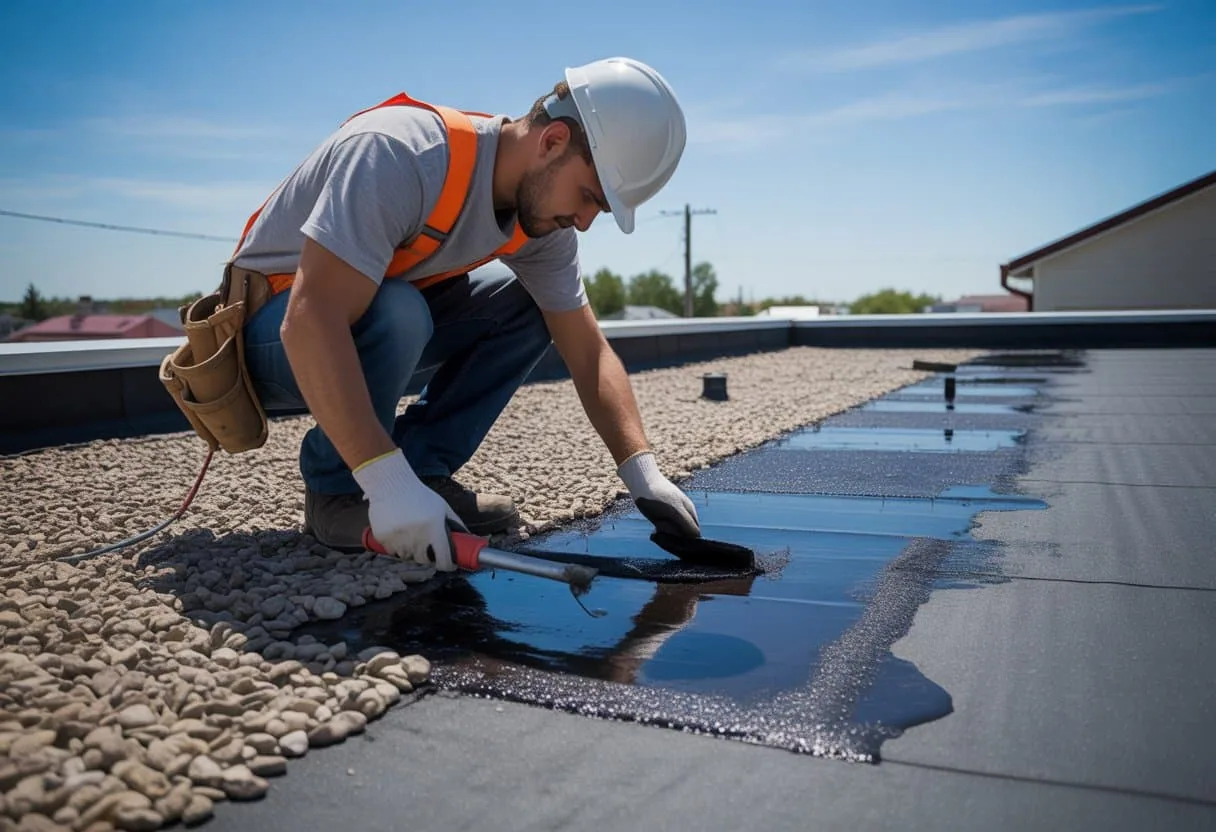
A black membrane roof with a loose perimeter edge needs more than a color-based diagnosis. We inspect EPDM sheet condition, seams, flashing, drainage, and attachment before pricing repair or replacement. The roof record should identify where material has moved, where water collects, and what remains concealed. From that evidence, an owner can decide whether to make a local repair, investigate the assembly, or compare a new system.
EPDM is a flexible synthetic-rubber membrane used on low-slope roofs. Project details vary by membrane thickness, seam method, insulation, attachment, and perimeter design. Hampton assets also have different access and operating needs, so a generic material description is not a scope.
We confirm safe access and map field areas, seams, penetrations, drains, edges, and past repairs. EPDM attachment and seam details vary, so the inspection records what is visible and flags what needs confirmation. At each seam, look for separation, contamination, movement, or a repair that no longer lies flat.
A leak can travel before it appears indoors. Compare the reported room and timing with slope, drainage, nearby curbs, wall transitions, and membrane condition. A stain alone does not establish the entry point. Any test opening needs an agreed location, owner authorization, and restoration method.
Soft insulation, repeat patches, or broad movement can change the replacement decision. Photos help distinguish one defect from a pattern. Request a commercial roof inspection when the roof record is incomplete.
EPDM may be mechanically attached, adhered, or ballasted where structure and design permit. Each method has different substrate, perimeter, and installation requirements. The complete design names insulation, cover board when selected, flashing, edge securement, and drainage, not just the field sheet.
Edge metal and parapet transitions deserve the same design attention as the field. The detail set should show how the membrane terminates, how corners are handled, and where dissimilar materials meet. These locations see movement and make later inspection easier when they are accessible and documented.
The statewide Virginia code also governs renovation and repair on existing buildings. Confirm project requirements, wind design, fire and energy provisions, and permits with the design professional and authority having jurisdiction. An existing roof is not proof of current approval.
Repair can address a confirmed defect if adjacent material remains sound. Recover requires a review of moisture, attachment, layer count, roof height, and restrictions. Tear-off exposes more of the deck but adds disruption and disposal. Compare options in writing, with allowances for concealed conditions and a process for approving changes.
Downtown Hampton and Coliseum Central include mixed-use, office, and retail buildings. Those settings can call for different access and interior-protection plans than a warehouse; the site walk establishes each building’s conditions.
Parapets, joints, hatches, skylights, pipes, curbs, and scuppers create transitions that must be included in the roof scope. Assign equipment disconnects, temporary supports, flashing, and reconnection. A thicker insulation package can change curb height and clearances.
Before mobilization, identify the building contact who receives daily progress notes and can approve a scope change. Post notices before access or noise changes, and keep the emergency route clear. If an interior space cannot be interrupted, define alternate work hours and protection before that section is scheduled.
Compare EPDM with TPO roofing or PVC roofing by approved details and building needs. Do not assume a new sheet bonds to the existing one. For occupied facilities, identify the daily open area, dry-in point, hoisting zone, and routes that must remain clear.
Hurricane Isabel brought heavy rain and roadway high water across central and southern Virginia in 2003. Along Hampton Roads tidal waterways, coastal flooding is a separate condition to include in planning. After an event, the EPDM inspection checks seams, attachment, drainage, and any area that required temporary cover before normal access resumes.
At close of shift, check that temporary protection sheds water and that the next crew can reach the work without crossing a wet or unfinished area. The owner should know which forecast condition triggers a stop and how the open section will be secured.
On the roof, document water paths, drains, edges, and transitions. A membrane cannot resolve site-wide flooding. A designer may need to consider slope, overflow, and outlet capacity together. For outlet work, use roof drain and scupper service.
Installation materials have manufacturer-specific conditions. Plan protection for unfinished seams and edges when precipitation approaches, and name who may pause work. The schedule should show a closure detail for each shift.
A puncture, separated seam, damaged flashing, or loose edge needs a method suited to the condition. The estimate should state location, preparation, compatible material, access, and whether nearby areas will be tested. If sheet type or contamination is uncertain, evaluate it before proposing a patch.
Bid comparisons should separate base scope from allowances. List the assumed number of penetrations, edge length, drain work, and deck repairs where those quantities can be surveyed. Show unit prices for uncertain conditions only when the owner can see how they will be measured and approved.
Replacement scope lists tear-off depth, deck allowance, insulation, cover board, attachment, membrane, perimeter, flashing, and tie-ins. Assign equipment work and explain how concealed moisture will be documented and approved. Compare full replacement with commercial roof replacement or with a recover only when the assembly supports it.
Hampton’s leading sectors include health care, advanced manufacturing, aerospace, defense-related work, professional services, and retail. On an EPDM roof, translate each property's operating pattern into equipment clearance, access windows, and protection for space below the repair zone.
Before work, align submittals, details, safe access, inspection steps, and change approval. Photos can record deck, insulation, attachment, seams, flashing, and daily closures. If removal reveals a different build-up, stop at the authorized boundary and request direction before adding work.
Mark test locations, repairs, and deferred areas on the final plan. Pair each entry with a photo and a short condition note. This record helps the next inspection start with known limits instead of reopening a question that the current project already resolved.
Magruder Boulevard and Interstate 64 connect the Hampton Roads Center business parks. Before an EPDM crew mobilizes, match delivery instructions to the property’s approved route, staging point, entry, and tenant coordination needs.
After turnover, review seams, flashing, edges, drains, penetrations, and other-trade work under the owner's maintenance and access rules. Record dates, locations, and photos so recurring findings can be separated from new damage.
Keep outlets clear and review new equipment or cabling before a trade fastens through the membrane. A log should show observations, authorized work, and follow-up. For capital planning, consider a roof condition report.